EU-wide pilot exercise on banks’ climate risk by EU Banking Authority

The EU aggregated GAR stands at 7.9%, which identifies the institutions’ assets financing activities that are environmentally sustainable according to the EU taxonomy.

More disclosure on transition strategies and GHG emissions would be needed to allow banks and supervisors to assess climate risk more accurately. It is important banks to expand their data infrastructure to include clients’ information at activity level.

Regarding the EU taxonomy classification, banks are currently in different development phases to assess the greenness of their exposures. The two estimation techniques, banks’ bottom-up estimates and a top-down tool, are considered in the exercise and the report highlights the differences in outcomes.

The scenario analysis shows that the impact of climate-related risks across banks has different magnitudes and is concentrated in some particular sectors. The findings should be considered as starting point estimates for future work on climate risk.

More on: https://bit.ly/3ufO53o

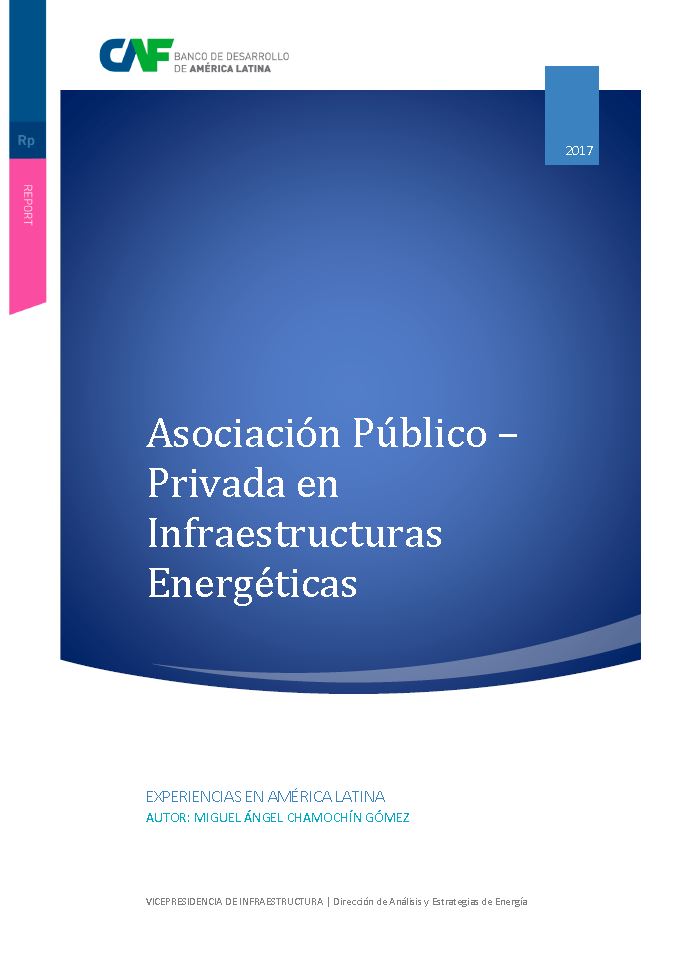
My new publication: “Public-Private Partnership in Energy Infrastructures: Experiences in Latin America”

Featured

Energy infrastructures in Latin America deserve a particular study with regard to Public-Private Partnerships (PPPs). Its different regulatory frameworks and degrees of institutional and operational maturity, make them to have a unique map of risks, policies and best practices. My publication on “PPPs in the Energy Infrastructures: experiences in Latin America” thus is proposed. The demographic increase and the economic growth of the Latin America countries emphasize the need for large investments in infrastructure to reduce the gap, which are also linked to their plans for sustainable development, climate action and interconnection to the infrastructures of the region (for example, electrical networks, gas pipelines and gasification terminals), and the regional energy markets. It is expected that the Public-Private Partnerships can funnel these investments. To do this, governments must create an environment in which the private sector can grow, by developing transparent regulatory frameworks. These reforms should gain the confidence of investors in these countries, which now compete with the other countries in a globalized world, to attract Foreign Direct Investment (FDI) to their energy markets. All this leads to reforms in each country in order to establish a more attractive environment to do business. A new field of opportunities opens up, driven by the national and international expansion plans of the private sector, and the search for better returns by the large investment funds in a context of low interest rates. In this scenario, the International Financial Institutions (IFI) must continue supporting infrastructure development.

Publication available on http://www.scioteca.caf.com/handle/123456789/1225

Captura

My study: The finance, sustainability and energy nexus

CapturaThe study highlights the importance of promoting and coordinating the collaboration of the different financial actors to address the priority sustainability challenges (sustainable finace). It analyses the different mechanisms that are facilitating the integration of climate change policies and emphasizes the interest of considering the financial sector, in the coordination of policies, such as the implementation of new Laws on Climate Change and Energy Transition.

The study analyses the different mechanisms that are facilitating the integration of sustainability policies in the financial sector driven by the  and the Sustainable Development Goals. The G20 and UNEP FI are driving the finance, sustainability and energy nexus through different initiatives which are covered in the work (e.g. TCFD, GFSG, CFSG, PRI, PSI, SSE, PIF). The analysis highlights the importance of other initiatives related to green and climate bonds (green finance), sustainable banking, standards, reporting, indexes, methodologies and sustainability associations.

The inclusion of green securities in the stock market would foster new possibilities for channelling investments, financing debt and opening the door to new sustainable business models nationally and regionally. The analysis highlights the importance of promoting and coordinating the collaboration of the different financial actors to address priority challenges such as climate change, through consulting and involving key actors such as banking regulators, stock exchanges, financial institutions, insurance companies, institutional investors, credit agencies, corporations and relevant ministries.

The complete Spanish version is accessible on http://bit.ly/2prIEBo
An executive summary in English is accessible on http://bit.ly/2pIEq5A