The EU Digital Law

This June, it was approved the last pending initiative of those related to updating the rules that govern digital services in the EU: the 𝗗𝗶𝗴𝗶𝘁𝗮𝗹 𝗦𝗲𝗿𝘃𝗶𝗰𝗲𝘀 𝗟𝗮𝘄 (𝗗𝗦𝗔) and the 𝗗𝗶𝗴𝗶𝘁𝗮𝗹 𝗠𝗮𝗿𝗸𝗲𝘁𝘀 𝗟𝗮𝘄 (𝗗𝗠𝗔). Another important legislation is the 𝗘𝗨 𝗔𝗿𝘁𝗶𝗳𝗶𝗰𝗶𝗮𝗹 𝗜𝗻𝘁𝗲𝗹𝗹𝗶𝗴𝗲𝗻𝗰𝗲 𝗔𝗰𝘁 (“𝗔𝗜 𝗔𝗰𝘁”) which is being amended, thus it is pending the very soon approval to encourage innovation and refine the definition of AI.

𝗧𝗵𝗲 𝗗𝗦𝗔 𝗮𝗻𝗱 𝗗𝗠𝗔 𝗵𝗮𝘃𝗲 𝘁𝘄𝗼 𝗺𝗮𝗶𝗻 𝗼𝗯𝗷𝗲𝗰𝘁𝗶𝘃𝗲𝘀: to create a safer digital space in which the fundamental rights of all users of digital services are protected; and establish a level playing field to foster innovation, growth and competitiveness. As for the DSA, new guidelines are established in terms of liability for digital service providers, until now framed, in a more lax way, in the capital Directive 2000/31/EC, on electronic commerce.

The DMA establishes a series of narrowly defined objective criteria to classify certain online platforms as “gatekeepers”. Pending final approval by the European Parliament and the Council, the final text is expected to be adopted between September and October 2022. 𝗕𝗮𝘀𝗶𝗰𝗮𝗹𝗹𝘆, 𝗶𝘁 𝗶𝘀 𝘁𝗵𝗲 𝗹𝗮𝗿𝗴𝗲𝘀𝘁 𝗿𝗲𝗴𝘂𝗹𝗮𝘁𝗼𝗿𝘆 𝗿𝗲𝘀𝗽𝗼𝗻𝘀𝗲 𝗽𝗿𝗼𝗽𝗼𝘀𝗲𝗱 𝘁𝗼 𝗱𝗮𝘁𝗲 𝗳𝗿𝗼𝗺 𝘁𝗵𝗲 𝗘𝗨 𝗮𝗴𝗮𝗶𝗻𝘀𝘁 𝘁𝗵𝗲 𝗱𝗼𝗺𝗶𝗻𝗮𝗻𝘁 𝗽𝗼𝘀𝗶𝘁𝗶𝗼𝗻 𝗶𝗻 𝘁𝗵𝗲𝗶𝗿 𝗿𝗲𝘀𝗽𝗲𝗰𝘁𝗶𝘃𝗲 𝘀𝘂𝗯𝘀𝗲𝗰𝘁𝗼𝗿𝘀 𝗼𝗳 𝗱𝗶𝗴𝗶𝘁𝗮𝗹 𝗮𝗴𝗲𝗻𝘁𝘀 𝘀𝘂𝗰𝗵 𝗮𝘀 𝘁𝗵𝗲 𝘀𝗼-𝗰𝗮𝗹𝗹𝗲𝗱 𝗚𝗔𝗙𝗔𝗠 (Google, Apple, Facebook, Amazon and Microsoft).

More on: https://bit.ly/3OTtLQ4 https://bit.ly/2RYGUiH

𝗗𝗮𝘁𝗮 𝗶𝘀 𝘁𝗵𝗲 𝗳𝘂𝗲𝗹 𝗼𝗳 𝗱𝗶𝗴𝗶𝘁𝗮𝗹 𝘁𝗿𝗮𝗻𝘀𝗳𝗼𝗿𝗺𝗮𝘁𝗶𝗼𝗻.

𝗔𝗜, 𝗗𝗶𝗴𝗶𝘁𝗮𝗹 𝗧𝘄𝗶𝗻𝘀, 𝗢𝗽𝗲𝗻 𝗙𝗶𝗻𝗮𝗻𝗰𝗲, 𝗦𝗺𝗮𝗿𝘁 𝗗𝗮𝘁𝗮, 𝗜𝗻𝘁𝗲𝗿𝗻𝗲𝘁 𝗼𝗳 𝗧𝗵𝗶𝗻𝗴𝘀, 𝗜𝗻𝗱𝘂𝘀𝘁𝗿𝘆 𝟰.𝟬, 𝗪𝗲𝗯 𝟯.𝟬 𝗼𝗿 𝘁𝗵𝗲 𝗠𝗲𝘁𝗮𝘃𝗲𝗿𝘀𝗲 mega-trends depend on data.

A complex 𝗻𝗲𝘄 𝗿𝗲𝗴𝘂𝗹𝗮𝘁𝗼𝗿𝘆 𝗳𝗿𝗮𝗺𝗲𝘄𝗼𝗿𝗸 for data is emerging. The 𝗘𝗨 𝗚𝗲𝗻𝗲𝗿𝗮𝗹 𝗗𝗮𝘁𝗮 𝗣𝗿𝗼𝘁𝗲𝗰𝘁𝗶𝗼𝗻 𝗥𝗲𝗴𝘂𝗹𝗮𝘁𝗶𝗼𝗻 (𝗚𝗗𝗣𝗥) was drafted and passed, imposing obligations onto organizations anywhere, when targeting or collecting data related to people in the EU. Furthermore, new data- focused EU laws like 𝘁𝗵𝗲 𝗗𝗶𝗴𝗶𝘁𝗮𝗹 𝗠𝗮𝗿𝗸𝗲𝘁𝘀 𝗔𝗰𝘁 (𝗗𝗠𝗔), 𝘁𝗵𝗲 𝗗𝗶𝗴𝗶𝘁𝗮𝗹 𝗦𝗲𝗿𝘃𝗶𝗰𝗲𝘀 𝗔𝗰𝘁 (𝗗𝗦𝗔), 𝘁𝗵𝗲 𝗖𝘆𝗯𝗲𝗿 𝗥𝗲𝘀𝗶𝗹𝗶𝗲𝗻𝗰𝗲 𝗔𝗰𝘁 (𝗖𝗥𝗔), 𝘁𝗵𝗲 𝗗𝗮𝘁𝗮 𝗚𝗼𝘃𝗲𝗿𝗻𝗮𝗻𝗰𝗲 𝗔𝗰𝘁𝘀 (𝗗𝗚𝗔), 𝗮𝗻𝗱 𝘁𝗵𝗲 𝗔𝗿𝘁𝗶𝗳𝗶𝗰𝗶𝗮𝗹 𝗜𝗻𝘁𝗲𝗹𝗹𝗶𝗴𝗲𝗻𝗰𝗲 𝗔𝗰𝘁 (𝗔𝗜 𝗔𝗰𝘁) are now also set to come on-stream in the next few years. 𝗗𝗮𝘁𝗮 𝘀𝗰𝗶𝗲𝗻𝗰𝗲 𝗰𝗵𝗮𝗹𝗹𝗲𝗻𝗴𝗲𝘀 𝗲𝘅𝗶𝘀𝘁𝗶𝗻𝗴 𝗯𝘂𝘀𝗶𝗻𝗲𝘀𝘀 𝗺𝗼𝗱𝗲𝗹𝘀, supporting the creation of disruptive data-driven business models. The implementation of such 𝗻𝗲𝘄 𝗯𝘂𝘀𝗶𝗻𝗲𝘀𝘀 𝗺𝗼𝗱𝗲𝗹𝘀 𝗿𝗲𝗾𝘂𝗶𝗿𝗲𝘀 𝘁𝗵𝗲 𝗱𝗲𝘃𝗲𝗹𝗼𝗽𝗺𝗲𝗻𝘁 𝗼𝗳 𝗻𝗲𝘄 𝗲𝘁𝗵𝗶𝗰𝗮𝗹, 𝘀𝘂𝘀𝘁𝗮𝗶𝗻𝗮𝗯𝗹𝗲, 𝗮𝗻𝗱 𝗽𝗿𝗮𝗰𝘁𝗶𝗰𝗮𝗹 𝗹𝗲𝗴𝗮𝗹 𝗳𝗿𝗮𝗺𝗲𝘄𝗼𝗿𝗸𝘀 𝗳𝗼𝗿 𝘂𝘀𝗶𝗻𝗴 𝗱𝗮𝘁𝗮, 𝗮𝗻𝗱 𝘁𝗵𝗲 𝗮𝗱𝗼𝗽𝘁𝗶𝗼𝗻 𝗼𝗳 𝘀𝘂𝗰𝗵 𝗿𝗲𝗴𝘂𝗹𝗮𝘁𝗼𝗿𝘆 𝗮𝗻𝗱 𝗹𝗲𝗴𝗮𝗹 𝗮𝗰𝘁𝗶𝗼𝗻 𝘁𝗼 𝗱𝗿𝗶𝘃𝗲 𝗯𝘂𝘀𝗶𝗻𝗲𝘀𝘀 𝗮𝗱𝘃𝗮𝗻𝘁𝗮𝗴𝗲. However, the 𝗮𝗽𝗽𝗿𝗼𝗽𝗿𝗶𝗮𝘁𝗲 𝗯𝗮𝗹𝗮𝗻𝗰𝗲 𝗯𝗲𝘁𝘄𝗲𝗲𝗻 𝗳𝗿𝗲𝗲𝗱𝗼𝗺 𝗮𝗻𝗱 𝘀𝘂𝗽𝗲𝗿𝘃𝗶𝘀𝗶𝗼𝗻 𝗶𝘀 𝗲𝘅𝗽𝗲𝗰𝘁𝗲𝗱 𝘁𝗼 𝗿𝗲𝗺𝗮𝗶𝗻 𝗮 𝗰𝗼𝗻𝘁𝗿𝗼𝘃𝗲𝗿𝘀𝗶𝗮𝗹 issue during the whole legislative process. The policies emerging from 𝗘𝘂𝗿𝗼𝗽𝗲’𝘀 𝗱𝗶𝗴𝗶𝘁𝗮𝗹 𝗮𝗴𝗲𝗻𝗱𝗮 𝗳𝗼𝗿 𝟮𝟬𝟮𝟮 𝘄𝗶𝗹𝗹 𝗵𝗮𝘃𝗲 𝗶𝗺𝗽𝗼𝗿𝘁𝗮𝗻𝘁 𝗰𝗼𝗻𝘀𝗲𝗾𝘂𝗲𝗻𝗰𝗲𝘀 𝗳𝗼𝗿 𝗘𝘂𝗿𝗼𝗽𝗲’𝘀 𝗽𝗹𝗮𝗰𝗲 𝗶𝗻 𝘁𝗵𝗲 𝘄𝗼𝗿𝗹𝗱 𝗮𝗻𝗱 𝗶𝘁𝘀 𝗶𝗻𝘁𝗲𝗿𝗻𝗮𝘁𝗶𝗼𝗻𝗮𝗹 𝗽𝗮𝗿𝘁𝗻𝗲𝗿𝘀𝗵𝗶𝗽𝘀.

Digitalization and Sustainability

Digitalization and sustainability are two of the most disruptive forces. Digitalization can foster productivity growth and long-run prosperity. Nevertheless, it is challenging firms and people that cannot keep up, because it requires high investment costs, creates labour market risks derived from automation, and could even defy sustainability if not properly managed.

Sustainability has a transformation up-front costs and could be disruptive in the short-term, but at the same time, it could catalyse productivity gains, and energy efficiency, while conserving natural capital and reversing ecosystems’ degradation.

All in all, digitalization may reduce carbon emissions in the medium and long-term. Thus, it may impact decarbonization through higher energy consumption and carbon footprint of the digital sector, optimization, and structural economic changes.

Spain’ Sovereign Green Bond Issuance in September

The Spanish Sovereign Green Bond Framework is aligned with the four core components of the Green Bond Principles 2021 (GBP) and follows best market practices identified by Vigeo Eiris (VE). The Kingdom of Spain’s Sovereign Sustainability Rating from VE is 78/100, which indicates an ‘advanced’ sustainability performance, the highest level on VE’s four-point scale.

Spain will sell its inaugural green bond in September. The Spanish Treasury’s first such bond will have a 20-year maturity. Spanish government did not specify how much it plans to raise, though the government has identified 13.6 billion euros ($16.1 billion) of projects to finance or refinance projects tied to the country’s environmental objectives, including renewable energy, biodiversity protection, and climate change adaptation.

In addition, Spain will invest around 20 billion euros on other environmental programs through 2023 that will be financed by the European Union’s executive arm. The bloc is also expected to make its green bond debut later this year and ultimately become the world’s biggest seller, channelling those funds to member states as part of its pandemic recovery package.

The EU has also laid out a voluntary green bond framework and Spain plans to align its spending with the bloc’s classification of sustainable investments, or taxonomy. The first green bond is included in the country’s plan to issue 80 billion euros of net debt this year.

Spain’s Sovereign Green Bond Framework: https://bit.ly/3zNr22V

Vigeo Eiris’ Second Party Opinion: https://bit.ly/3rGEP8v

The EU Fit for 55 Package

It is intended to fundamentally revise the EU’s energy policy framework and thus adapt it to the EU updated climate targets. By 2030, the EU’s GHE are to be reduced by 55% compared to the amount emitted in 1990. While the focus in December 2021 will be on decarbonised gas and the buildings sector, ten initiatives was planned last 14 July 2021. Overall, the “Fit for 55 Package” with the initiatives listed below is the central measures package of the European Green Deal:

1.- Revision of the EU Emissions Trading System (ETS), including maritime transport, aviation and CORSIA

2.- Carbon Border Adjustment Mechanism (CBAM)

3.- Revision of the Effort Sharing Regulation (ESR)

4.- Revision of the Energy Tax Directive (ETD)

5.- Amendments to the Renewable Energy Directive (RED) to implement the ambition of the new 2030 climate target

6.- Amendments to the Energy Efficiency Directive (EED) to implement the ambition of the new 2030 climate target

7.- Reduction of methane emissions in the energy sector

8.- Revision of the regulation on the inclusion of greenhouse gas emissions and removals from land use, land use change and forestry (LULUCF)

9.- Revision of the Directive on the Deployment of Alternative Fuels Infrastructure

10.- Revision of the Regulation setting CO2 standards for new passenger cars and for new light commercial vehicles

11.- Revision of the Third Energy Package for gas (Directive 2009/73/EU and Regulation 715/2009/EU) to regulate competitive decarbonised gas markets in Q4 2021

12.- Revision of the energy performance of Buildings Directive (EPBD) in Q4 2021

Vice-President Franz Timmermans presented the plans in Brussels last Wednesday. That was the kick-off for a long process, looking for agreement among the Commission, the Parliament, and the Member States. This will be a challenge, as the new seems to be on achieving the reduction targets, which open to the countries’ challenges of what adjustments are necessary to achieve them. Another key aspect is how to support industries and companies that compete with others abroad EU, maintain international competitiveness. Specially with competitors in countries where the financial burden of environmental protection is lower. Nowadays, these are only draft initiatives, we do not know yet when the implementation will begin in the individual Member States, and what specific content will have agreed on at that time.

This stablishes the EU positioning of climate policy in everyday Europeans’ life, impacting firms and the way Europe makes business. It is key to ensure no one must be left behind in the process, to guarantee a social and society fair transition.

More on: https://bit.ly/2VJlB6i

Innovation is key for the Net‐Zero Emissions Scenario 2050 (NZE)

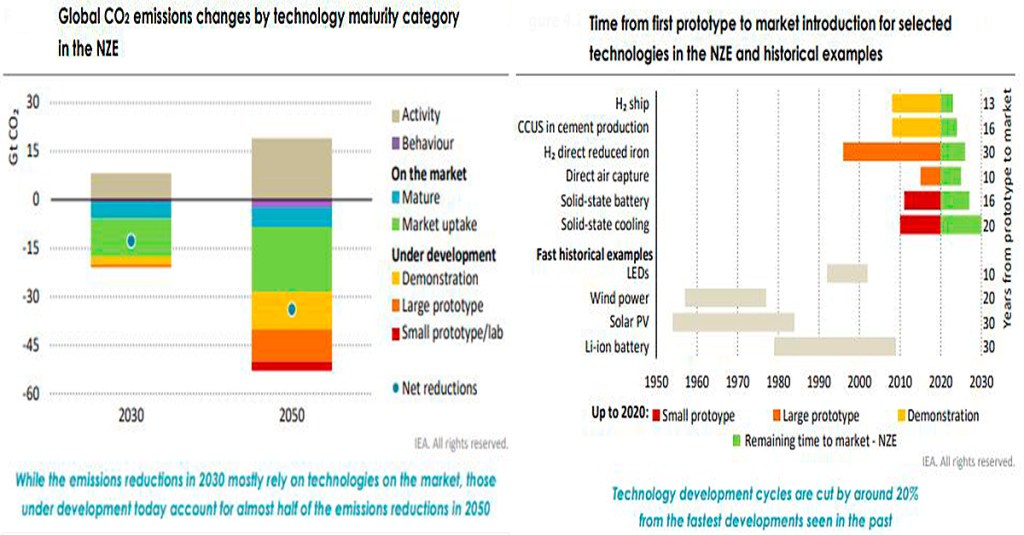
The @IEA just released the world’s first comprehensive roadmap for the global energy sector to reach net-zero emissions by 2050. They say almost 50% of the emissions reductions needed in 2050 in the NZE depend on technologies that are at the prototype or demonstration stage. This share is even higher in sectors such as heavy industry and long‐distance transport.
This is clearly ambitious, as most clean energy technologies that have not been demonstrated at scale today should reach markets by 2030 at the latest. Technologies at the demonstration stage, such as CCUS in cement production or low‐emissions ammonia‐fuelled ships, are brought into the market in the next three to four years. Hydrogen‐based steel production, direct air capture (DAC) and other technologies at the large prototype stage reach the market in about six years, while most technologies at small prototype stage – such as solid state refrigerant‐free cooling or solid state batteries – do so within the coming nine years.
In the NZE, electrification, CCUS, hydrogen and sustainable bioenergy account for nearly half of the cumulative emissions reductions to 2050. Just three technologies are critical in enabling around 15% of the cumulative emissions reductions in the NZE between 2030 and 2050: advanced high‐energy density batteries, hydrogen electrolysers and DAC.

You can read the report “Net Zero by 2050: A Roadmap for the Global Energy Sector” here

Hydrogen’s innovation in the EU framework of Energy and Climate

Hydrogen’s innovation in the EU framework of Energy and Climate: hydrogen holds the potential for helping Europe to reach its targets of a climate neutral 2050. The development of new clean tech industries can help Europe to bounce back even faster, while boosting its competitiveness.

Europe is looking at a power system that will be based on more than 80% renewables by 2050. Hydrogen has the potential to reach 13-14% of Europe energy mix by 2050. Today it only reaches just about 2%.

Europe also looks to hydrogen for its use in industry and areas of transport where emissions are difficult to abate and where electrification cannot be guaranteed. Today’s demonstration projects in steel making are very promising and should be scaled up rapidly.

EU industry holds a strong global position in hydrogen, it simply does not have the infrastructure at scale yet to improve on its goals. Thus, Hydrogen strategy puts forward ambitious targets to install 6 GW of electrolyser capacity by 2024 and 40 GW by 2030 producing up to 10 MTn of renewable hydrogen.

Even if the costs have already been reduced by 60% in the last ten years, it is required investments which is the biggest barrier to innovation. EU decreased its public investment in research and innovation by 13% over the last years.

For this reason, the 672.5 billion Recovery and Resilience Facility will channel 37% of its grants and loans to climate-related investment. Also, Horizon Europe has a budget of 95.5 BEUR, 35% of these funds will be dedicated to the green transition.

More on:

2020 report on the State of the Energy Union https://bit.ly/3bfvptA

A Hydrogen Strategy for a climate-neutral Europe https://bit.ly/3y8fOWX

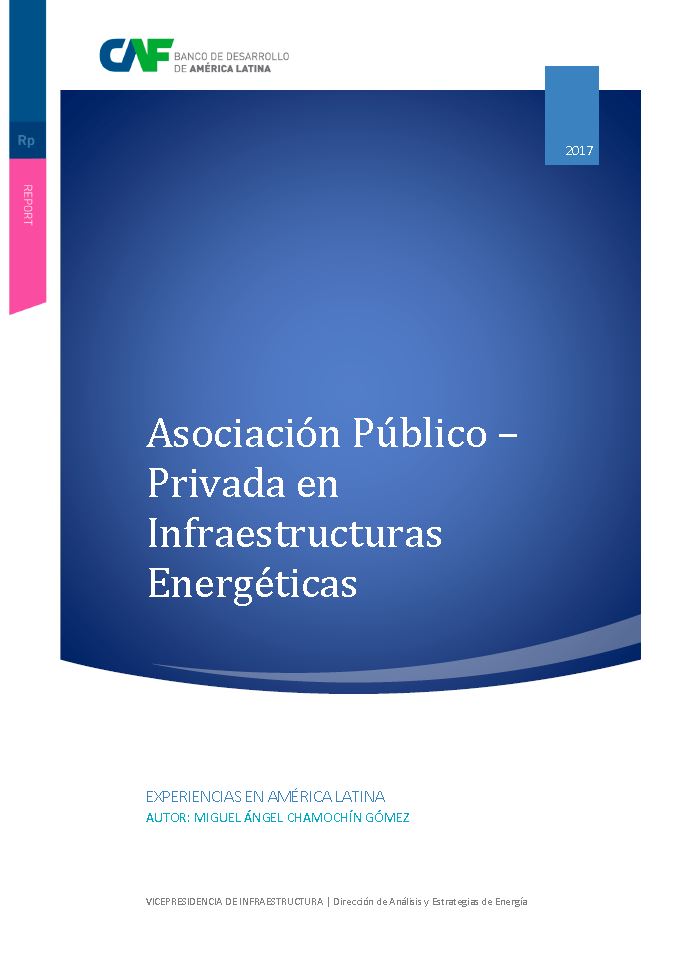
My new publication: “Public-Private Partnership in Energy Infrastructures: Experiences in Latin America”

Featured

Energy infrastructures in Latin America deserve a particular study with regard to Public-Private Partnerships (PPPs). Its different regulatory frameworks and degrees of institutional and operational maturity, make them to have a unique map of risks, policies and best practices. My publication on “PPPs in the Energy Infrastructures: experiences in Latin America” thus is proposed. The demographic increase and the economic growth of the Latin America countries emphasize the need for large investments in infrastructure to reduce the gap, which are also linked to their plans for sustainable development, climate action and interconnection to the infrastructures of the region (for example, electrical networks, gas pipelines and gasification terminals), and the regional energy markets. It is expected that the Public-Private Partnerships can funnel these investments. To do this, governments must create an environment in which the private sector can grow, by developing transparent regulatory frameworks. These reforms should gain the confidence of investors in these countries, which now compete with the other countries in a globalized world, to attract Foreign Direct Investment (FDI) to their energy markets. All this leads to reforms in each country in order to establish a more attractive environment to do business. A new field of opportunities opens up, driven by the national and international expansion plans of the private sector, and the search for better returns by the large investment funds in a context of low interest rates. In this scenario, the International Financial Institutions (IFI) must continue supporting infrastructure development.

Publication available on http://www.scioteca.caf.com/handle/123456789/1225

Captura

Entrevista en Onda Madrid

TelemadridOnda Madrid

Aquí no hay Playa
Programa del lunes 28 de Agosto de 2017

20170829 Onda Madrid.

Por Carlos Honorato y Paloma Nolasco

Entrevista a Miguel Chamochín sobre su libro

Hoy hemos tenido con nosotros a Miguel Chamochín en Onda Madrid, que ha publicado su libro titulado  “Internacionalización, Desarrollo Sostenible y Energías Renovables: América Latina”.

Su libro tiene un carácter divulgativo, se dirige tanto a profesionales, como a estudiantes y público general, que quieran adquirir una visión en conjunto del sector de las energías renovables y sus implicaciones para América Latina.

La obra ha sido condicionada por los objetivos de desarrollar las infraestructuras de América Latina y alcanzar el desarrollo sostenible de la región. Estudia estas necesidades y los catalizadores que apoyan estos objetivos. Hace también un análisis de varios aspectos – como el comercio, mercado eléctrico, desarrollo sostenible, regulación, tecnología, agentes de mercado, inversiones y financiación – centrado en el sector de la energía renovable en América Latina. Es un ejemplo de la importancia de la coordinación de estos aspectos, que poseen ciclos y funcionamientos distintos, para realizar una “transición hacia un modelo sostenible”, que afronte los importantes retos que está atravesando la Agenda Internacional. Retos marcados por los Objetivos de Desarrollo Sostenible (ODS) de Naciones Unidas, y el Acuerdo de Cambio Climático de Paris.

El libro está disponible en Amazón, aqui

My book “Internationalization, Sustainable Development and Renewable Energy: Latin America”.

Featured

The book makes a multidisciplinary analysis (trade, electricity market, sustainable development, regulation, technology, market agents, investments and financing) of the renewable energy sector in Latin America.

The work starts with an introductory chapter presenting the need for internationalization of the renewable energy sector, which has a natural development market in Latin America. It then shows the needs, threats and opportunities of the Latin American Electricity Markets. It subsequently proceeds to analyse the sustainable development question in the energy sector, which allows us to enter into the issues associated with climate change and univWIP Cover Frontal Resized ENersal access to energy, focusing the analysis on Latin America. From here, the job carries out a critical study of the different renewable energy support mechanisms in the region. Afterwards, it studies the national R&D programs. The writing continues with the agents of the market and the roles and issues they find in their value chain within the region. From it, the book introduces the subject of investment, uncovering the ultimate problem, as well as the origin and destination of the investment flows that Latin America has received in renewable energy. Before finalizing, it analyses the financial instruments used for investment in renewable energy. Finally, the work ends with two real business cases of investment in power plants, which are financially modelled (Project Finance and Project Bonds). As a final conclusion, the writing highlights business opportunities, obstacles and solutions, all influencing the development of renewable energies in the region.

“The book is a vivid example of the great importance of the coordination among different sectors and areas (e.g. financial, monetary, fiscal, political, economic, business, technological, social, etc.), which have different cycles and operations, in order to face the major challenges of mankind today.”

Available now on Amazon here

Follow me on twitter: @MiguelChamochin